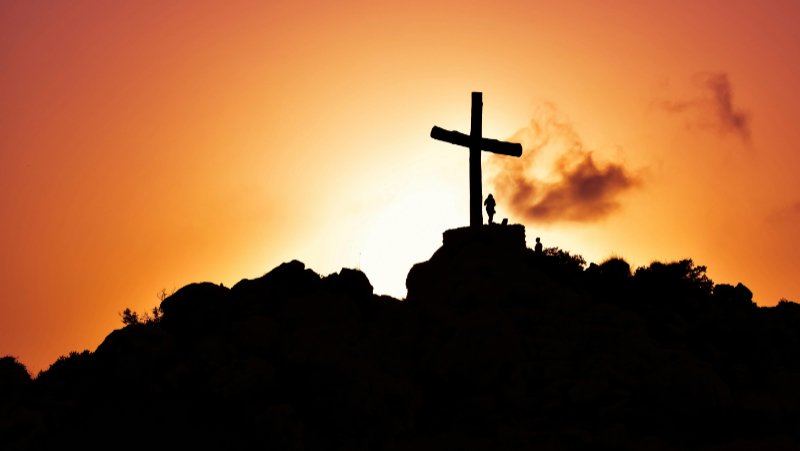
Theme: The purpose of Jesus’ life on earth
1 Peter 2:24 (NIV), ‘“He himself bore our sins” in his body on the cross, so that we might die to sins and live for righteousness; “by his wounds you have been healed.”’
Question: What does this mean to you, what is your personal experience of this verse?
Related verses: Isaiah 53:5, 53:12, Mark 10:45, Luke 19:10, John 10:10, 12:46, 18:37
Meaning
The two phrases which Peter quotes are from Isaiah 53 in the section on the “Suffering Servant”.
Isaiah 53:12: ” He poured out His soul unto death, And He was numbered with the transgressors, And He bore the sin of many, And made intercession for the transgressors.”
This explains the substitutionary nature of the cross, how Jesus took the penalty of our sins upon himself to save us. But this was written 700 years before Jesus fulfilled this promise of God; it shows the cross was not a defeat, but the crucial part of God’s plan to save mankind from sin.
Isaiah 53:5: “But he was pierced for our transgressions; he was crushed for our iniquities; upon him was the chastisement that brought us peace, and with his wounds we are healed.”
This repeats the explanation that Jesus went to the cross as our substitute, but it also describes the peace and healing from sin that we are given by His suffering and death.
All of Jesus’ ministry on earth was leading up to His victory over sin on the cross and His resurrection – from the time in Luke 4:17 of His reading from Isaiah 61 about the coming Messiah and proclaiming “Today this scripture is fulfilled in your hearing”, through His many miracles that showed His divinity, His teaching of the disciples about who He was and what He must do, and His teaching of people of how they could only be saved by God’s grace, to prepare them to receive His victory – all was in preparation for the cross.
Back in the 1970’s and 80’s some churches became shy about mentioning sin. But without an understanding of mankind’s state of sin (which we looked in Romans 3:10: “There is no one righteous”), there is no understanding of mankind’s state of separation from God, the source of suffering and death, and the need for God’s salvation. As a result, those churches could not make sense of the cross, and I remember skimming through a book which outlined lots of possible reasons for the cross, none of which made sense, while it ignored the crucial reason we have been given in the bible.
And that same lack of purpose flowed through to preaching about the ministry of Jesus, He was demoted to the role of a prophet, with various purposes invented for his ministry. But an author I read hit the target when he said he didn’t want ever again to hear the phrase (which I have often heard), “Jesus came to teach us how to live” – that was the role of all the prophets God had sent in Old Testament times, but that had never worked, the prophets had been repeatedly ignored. People did not need another prophet, they needed a Saviour.
Jesus did not come to advise, he came to die, for us.
Jesus did not come to tell people how to live, He came to give them life — a new and real life that is freed from slavery to sin. Jesus states in John 10:10, “I have come that they may have life, and have it to the full.” Not just in eternity, but even now. As we place our faith in Him and what He has done for us on the cross, he lives in us through His Holy Spirit.
Personal Experience
This verse gives uplifting encouragement, that despite the failings I see in myself, God has given me the forgiveness that Jesus won on the cross for me. With Paul in Romans 7:19, I can confess that I don’t feel free from sin, I so often do what I don’t want to, and don’t do the good I should.
But I notice that with my non-believing friends, life is a never-ending cover up of sin, a refusal to recognise it. It’s all about self-justification, but the problem of awareness of sin is never resolved.
A family connection once began to talk about his sense of wrongdoing, the way with age it eats away at us from within. So, I offered to talk about the only solution, but warned him it involved the Christian faith to which he was bitterly opposed; and sadly, he immediately stopped conversation on that, he said he had it covered and it wasn’t a problem.
I thank the Holy Spirit for giving a desire to recognise my sin, a need to confess that to God, and an eagerness to be freed from it. And also a readiness to be shown more in my life that needs to be corrected.
While I would regard my failures as a reason to give up, I think God has other ideas, and He gives new opportunities and tasks to do in His name.
Praise God that through Jesus He doesn’t give up on me when I might.
0 Comments